Rose After Dark
Rose After Dark: hibiscus traditions & blood-pressure research. Explore traditional ingredient uses, evidence, and cautions.
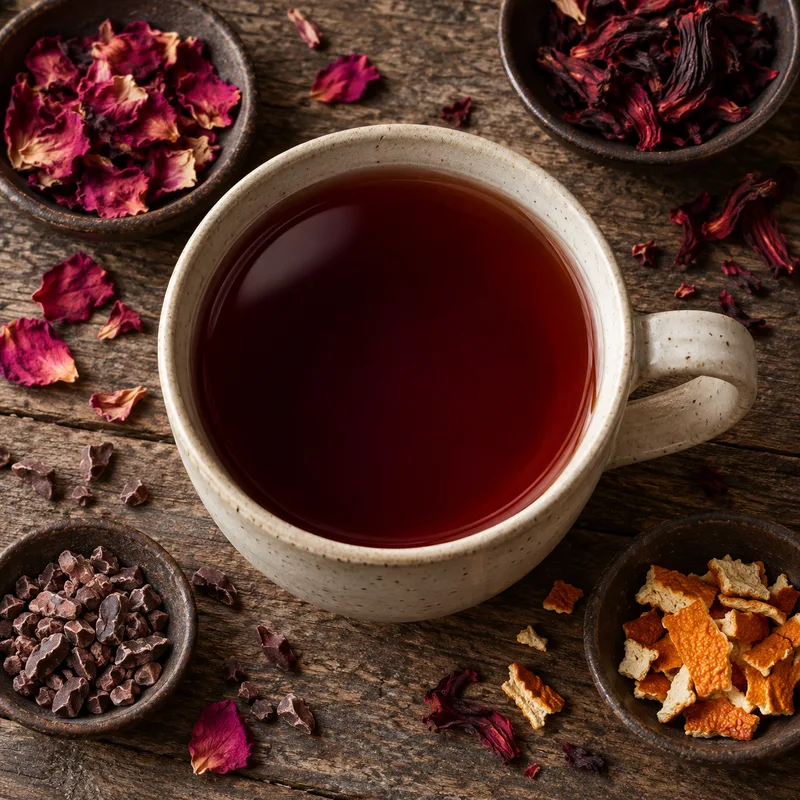
Styled cup illustration · brewed color may vary.
Rose petals and hibiscus meet cacao nibs and orange peel in a rich, aromatic blend. Floral fragrance, tart fruit notes, and a cacao finish make a distinctive after-dinner cup.
Tin $32 · Tube $18. Final price and availability are confirmed at checkout.
Back to shopHow to brew
Hot infusion
1–2 teaspoons · 1 cup / 8 fl oz · Just-boiled water · 212°F / 100°C · 10–15 minutes
- Pour just-boiled water over the tea.
- Cover and steep for 10–15 minutes.
- Strain before serving.
Cold brew
2 teaspoons · 1 cup / 8 fl oz · Cold water · refrigerate · 12–24 hours
- Add the tea to cold drinking water in a clean, covered container.
- Steep in the refrigerator for 12–24 hours.
- Strain and serve chilled.
Use a clean, covered container. Steep in the refrigerator at 40°F / 4°C or below, then strain and keep refrigerated.
Stir before straining so the cacao, petals and citrus mingle.
Traditional medicinal uses
Hibiscus traditions & blood-pressure research
Hibiscus has a long beverage tradition, with a tart, richly colored infusion enjoyed hot or chilled. Modern researchers have also studied hibiscus tea and blood pressure.
Evidence and cautions
A small randomized trial studied a specific hibiscus-tea regimen in adults with elevated blood pressure. It did not study this blend; the result does not make this tea a treatment or a replacement for prescribed medication.
If you use blood-pressure medicine or have low blood pressure, ask your clinician about hibiscus. Ask a qualified clinician about herbs if you take medicines, are pregnant or breastfeeding, or are choosing a tea for a child. Follow the product’s preparation directions.
Ingredient history for education. This blend is not intended to diagnose, treat, cure, or prevent disease.