Elderberry Ember
Elderberry Ember: elderberry & cold-season traditions. Explore traditional ingredient uses, evidence, and cautions.
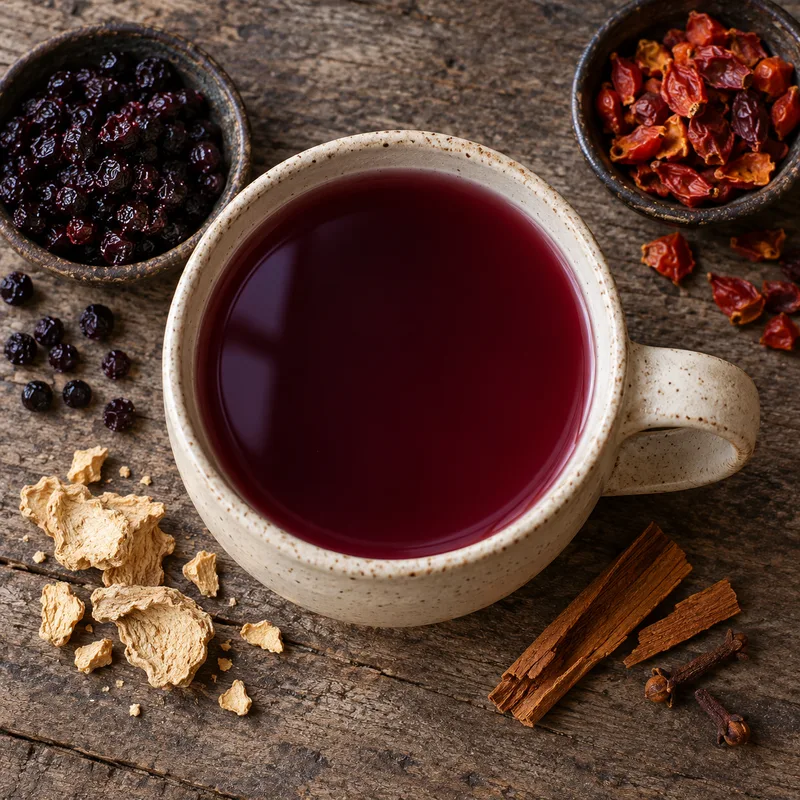
Styled cup illustration · brewed color may vary.
Elderberry and rose hips meet ginger, cinnamon, and clove in a deep berry-and-spice blend. Cook it using the stovetop directions before serving; for an iced cup, chill the prepared tea after cooking.
Tin $56 · Tube $30. Final price and availability are confirmed at checkout.
Back to shopHow to brew
Stovetop simmer
1–2 teaspoons · 1 cup / 8 fl oz · Bring to a boil, then simmer · 30 minutes
- Combine the tea and water in a small saucepan.
- Bring to a boil, reduce the heat and simmer for 30 minutes. Add water if needed to keep the herbs submerged.
- Strain before serving.
Cook first. Do not cold-steep uncooked dried elderberries. For an iced cup, prepare with heat as directed, strain, cool promptly and refrigerate before serving over ice.
Traditional medicinal uses
Elderberry & cold-season traditions
Elderberry has a folk-medicine history associated with colds and flu. That history informs interest in the plant; it does not show that this fruit-and-spice tea prevents illness or boosts immunity.
Evidence and cautions
NCCIH describes limited human research. Studies of other elderberry preparations do not establish the benefits of this blend or replace medical care.
Do not eat raw elderberries. Follow the blend’s cooking directions; drying alone is not a substitute for cooking. Ask a qualified clinician about herbs if you take medicines, are pregnant or breastfeeding, or are choosing a tea for a child. Follow the product’s preparation directions.
Ingredient history for education. This blend is not intended to diagnose, treat, cure, or prevent disease.